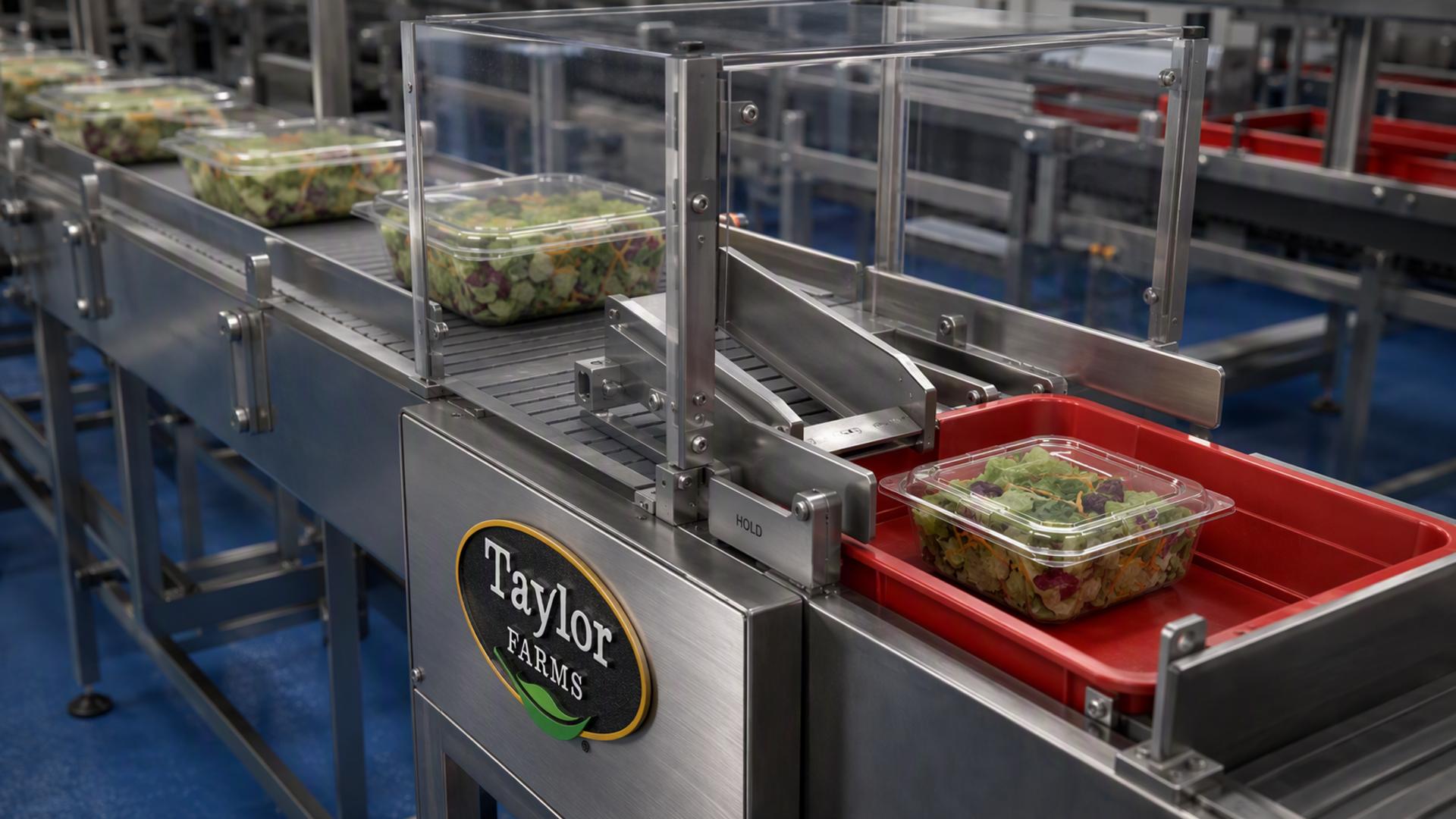
Taylor Farms Cyclospora Recall: 6 Facts, As Reported by the Source
Headlines linking an iceberg lettuce Cyclospora outbreak to Taylor Farms may prompt questions about what has been confirmed. For current, company-provided details, Taylor Farms directs readers to its dedicated Cyclospora Information Hub, which it says will be updated as information becomes available.
Below is a source-based summary of the information currently published there, including where to find updated recall information.
1. Taylor Farms paused operations and took further precautions
Taylor Farms says on its Cyclospora Information Hub that it voluntarily stopped sourcing and producing iceberg lettuce from central Mexico. As of July 18, 2026, the company had also temporarily halted all production at the central Mexico facility.
The company states that independent third-party specialists have been engaged to perform a comprehensive assessment of the facility's food-safety procedures. It also says it remains in coordination with the FDA, CDC, and state health agencies.
2. A limited set of store products was included
The recalled lettuce was distributed chiefly through foodservice, rather than sold on grocery shelves, according to the Taylor Farms Cyclospora Information Hub. Retail involvement was limited to selected Walmart Marketside products.
|
Product |
Package sizes |
Best if Used By dates |
|---|---|---|
|
Marketside Iceberg Salad |
12 oz and 24 oz |
7/18/2026 to 8/3/2026 |
|
Marketside Shredded Lettuce |
8 oz and 16 oz |
July 18 to August 3, 2026 |
Taylor Farms reports that all of these products have been taken off store shelves.
3. The company initiated the recall on its own
According to the Taylor Farms Cyclospora Information Hub, the company announced a voluntary recall on July 17, 2026. It covered iceberg lettuce grown in central Mexico after that lettuce was identified as a potential source associated with one of the recent Cyclospora outbreaks.
The hub says Taylor Farms acted before the FDA mandated a recall. It further states that the company's recall extended beyond the particular lots identified through the FDA traceback investigation.
4. Distribution covered a defined group of states
Taylor Farms states that recalled shredded iceberg lettuce was sent out from June 29 through July 16. Distribution occurred in Alabama, Arkansas, Connecticut, Florida, Georgia, Iowa, Illinois, Indiana, Kansas, Kentucky, Louisiana, Massachusetts, Maryland, Michigan, Missouri, Mississippi, North Carolina, New Hampshire, New Jersey, Ohio, Oklahoma, Pennsylvania, South Carolina, Tennessee, Texas, Virginia, Wisconsin, and West Virginia.
For consumers checking an individual item, the hub provides a detailed table identifying affected brands, product descriptions, and use-by dates.
5. The scope applies only to iceberg lettuce from central Mexico
The Taylor Farms Cyclospora Information Hub says the recall specifically concerns lettuce that was sourced and processed at the company's central Mexico facility. Taylor Farms retail-label products, including chopped kits and salad kits, are excluded from the recall.
According to the hub, a label that does not state “Product of Mexico” indicates the item was grown in either the United States or Canada and is not affected.
6. New testing information is shared as it becomes available
As of August 5, 2026, the FDA had no confirmed positive Cyclospora results from product testing, according to the hub. Taylor Farms says it spends more than $200 million each year on independently audited and verified food-safety protocols.
The company also states that it will continue providing information openly while the investigation moves forward.
How to find the most current details
Recall information and outbreak investigations can change as further findings emerge. Taylor Farms recommends checking its own resources rather than relying on secondary summaries:
- Taylor Farms Cyclospora Information Hub : The company’s primary location for statements, FAQs, food-safety commitments, and contact information related to this outbreak.
- Taylor Farms Recall Page : Updated with active recalls, including complete affected-product lists, states, and use-by dates.
Taylor Farms advises anyone who believes they possess a recalled item to throw it away and says refunds can be obtained at the location of purchase. People experiencing symptoms of illness are encouraged to contact their physician. For additional guidance and contact information, visit the Cyclospora Information Hub.